Regulatory Intelligence
Live regulatory signal, technical white papers and client-ready research notes for cross-border boards, compliance teams and operators.
Discuss A Research Agenda
Signals matter when they change release logic, evidence demands or management decisions.
The research surface is meant to shorten the path from external signal to client-ready operating guidance.

Research gains credibility when it reads as part of a serious advisory platform.
The thought-leadership layer should feel connected to governance, board-level briefing and controlled mandate design rather than to generic commentary output.
Signals matter because they eventually hit live corridors, documents and release decisions.
Customs, origin, sanctions, valuation and SPS changes become commercially relevant when they reshape the actual file, the documentary pack or the route logic on a live flow.
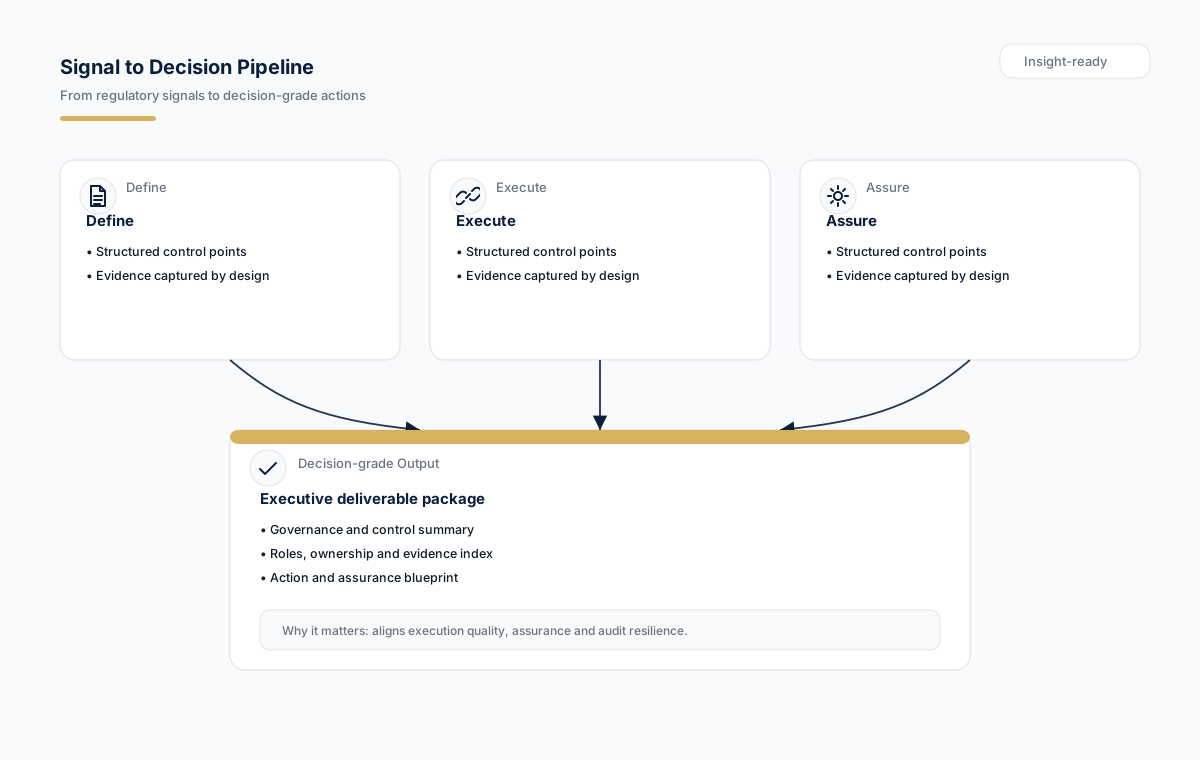
The research surface should shorten the distance between signal detection and mandate scoping.
Alerts and articles only add value if they clarify what the signal changes in customs, controls, valuation, origin, broker instructions or governance.
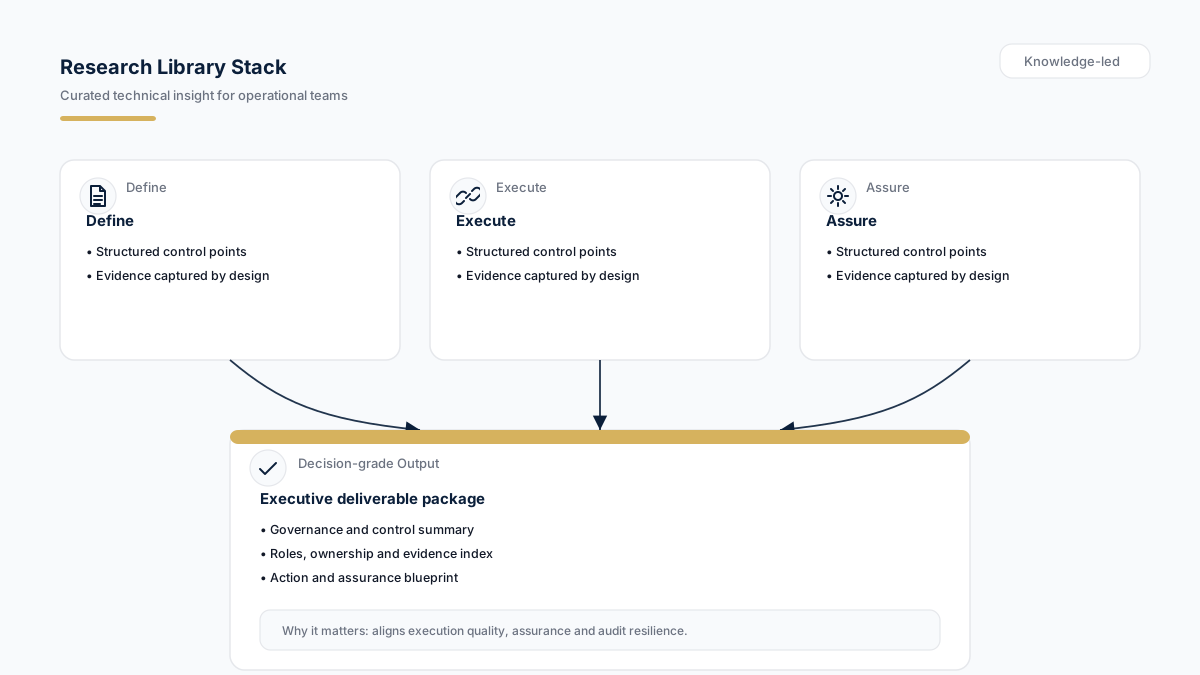
Insights, white papers and client-ready notes need different depths but one editorial logic.
The site should make the editorial ladder visible so buyers understand what is signal monitoring, what is doctrine and what is briefable working material.
Customs and origin
HS system logic, origin evidence, FTA use, supplier traceability and broker-instruction consequences when the underlying product story starts to drift.
Valuation and tax adjacency
Transfer pricing, royalties, assists, import VAT and customs-accounting bridges where finance and customs are no longer telling the same story.
Trade compliance and product controls
REACH, RoHS, CE/UKCA, CBAM, SPS, export controls and adjacent product-regulatory layers where border compliance starts to affect release logic, disclosure or commercial viability.
Sector and corridor notes
UK-EU operating models, aerospace and defence-adjacent flows, special procedures, OEM supply chains and regulated movements under practical pressure.
Global Trade News
Technical Whitepapers
This research desk is meant to bridge technical doctrine and operating choices: what the rule means, where the evidence sits, and how the issue travels into customs, finance, compliance and audit exposure.
Alerts for signal detection, white papers for structured doctrine, and client-ready notes for teams that need a practical decision path rather than generic commentary.
No whitepapers available currently.
Check back later for technical downloads.
How clients use this surface
As a first decision lens before escalation, as a briefing surface for internal teams, and as a way to align customs, trade compliance and finance when the same issue has multiple consequences.
Need a scoped briefing?
If one of the themes here is already affecting a live mandate, the right next step is a short briefing and a clearer evidence agenda, not just more reading.
Transfer Pricing
More explicit content on true-ups, customs valuation, import VAT, assists, royalties and ownership of the evidence pack.
Pillar Two
A measured research lane on GloBE governance, safe-harbour readiness, jurisdiction data quality and the operating consequences of finance decisions.
IFRS-aware reporting
Short explainers on IAS 12, disclosure posture and reporting coherence where cross-border tax issues enter board, audit or close-cycle discussion.
| Format | Used for | Typical client benefit |
|---|---|---|
| Live insight or alert | Fast identification of a new rule, sanctions development, corridor shift or control event. | Helps management and operators decide whether the issue needs immediate attention or only monitoring. |
| White paper | Structured doctrine on origin, valuation, controls, VAT-adjacent issues or corridor governance. | Gives internal stakeholders a more durable framework before they open a wider project or change operating practice. |
| Client-ready note | Shorter synthesis translated into a practical briefing for customs, finance, compliance or operations teams. | Reduces diagnostic waste and accelerates alignment on what the mandate or remediation effort should cover. |
Classification and Origin Narratives
Signals, doctrine and client-ready notes should feel like one connected desk.
The surface is strongest when live signals, white papers and mandate briefings read as different depths of the same research engine.
What the research layer proves
It shows that CSA Nexus can connect technical doctrine to operating consequences across customs, controls, valuation, import VAT and cross-border governance rather than publishing generic commentary for its own sake.
How it supports the offer
The thought-leadership layer is part of the commercial architecture: it helps clients frame a mandate faster, align internal stakeholders and decide whether they need a diagnostic, a defined project, retained support or a more tailored enablement layer.
Tax and finance governance themes now made more explicit
The research layer now reads more clearly across transfer pricing, indirect tax, Pillar Two and reporting logic. Those themes matter because they change who owns the evidence, how cross-border flows are explained and where management decisions become expensive if delayed.
Transfer pricing as an operating bridge
TP is treated less as a narrow valuation topic and more as a bridge connecting customs value, year-end adjustments, import VAT, evidence governance and management decision-making.
Pillar Two as a research lane
The public posture stays measured: Pillar Two enters first as a governance and operating-model theme, especially where data lineage, TP policy, entity structure and finance architecture need to stay coherent.
IFRS as a coherence layer
IFRS is not a standalone service tower here. It appears where IAS 12, disclosure timing and the wider reporting story matter for valuation, import VAT and the control narrative.
| Research lane | Typical article angle | Why the topic belongs on this site |
|---|---|---|
| TP-customs-indirect tax bridge | Year-end adjustments, royalties, assists, intercompany pricing and post-import corrective paths. | It connects customs, tax and finance stakeholders who are often reading the same value question through different technical languages. |
| Pillar Two operating governance | GloBE readiness, safe-harbour thinking, entity-model implications, documentation trail and management oversight. | It adds premium thought leadership without pretending that Pillar Two is already a mass-market service line. |
| IFRS-aware reporting alignment | IAS 12 disclosures, timing effects, finance-close coherence and audit-ready explanation where cross-border tax issues move into reporting. | It shows that the advisory model understands how technical tax questions surface inside management, accounting and governance discussions. |
Research expansion priorities now made explicit
The thought-leadership surface now points more clearly to the next family of public content where client questions are growing faster than generic commentary can support.
Indirect Tax & VAT
Import VAT, PVA-style logic, FE risk, fiscal representation and the customs-finance-tax bridge now sit as a clear editorial pillar rather than a passing mention.
TP bridge
Year-end adjustments, intercompany pricing, assists and royalties are framed as a recurring cross-functional governance topic, not only a valuation subpoint.
Chemicals and EPR
REACH, CLP, biocides, waste shipments, GPSR, WEEE, batteries and packaging EPR are treated as product-governance issues with border consequences.
ENS / ICS2 and sustainability
Pre-arrival security logic and sustainability-linked border evidence are now visible as real research lanes for buyers and operators.